In this assignment, you will be given the opportunity to also test your idea sketching skills. It is important to start working with basic ideas on paper and develop your concept from there on out.
- On an A4 landscape page, draw four equal squares. Create 4 more pages in this way. So, you’ll have 5 pages with four squares on each.
- Draw one or two squares or rectangles in each empty square to achieve the following visual effects (refer to your textbook, p.41 as guidance). You can work with the interaction of rectangles and squares to make the balance or imbalance more evident.
- Entering left
- Movement to the right
- Movement to the left
- Movement downwards
- Movement upwards
- Balance
- Tension
- Symmetry/asymmetry
Produce at least two different versions of each effect, recording your results each time. Explain in one or two sentences what you wanted to achieve (as shown in your manual).
- Submit your drawings and findings at WordPress.
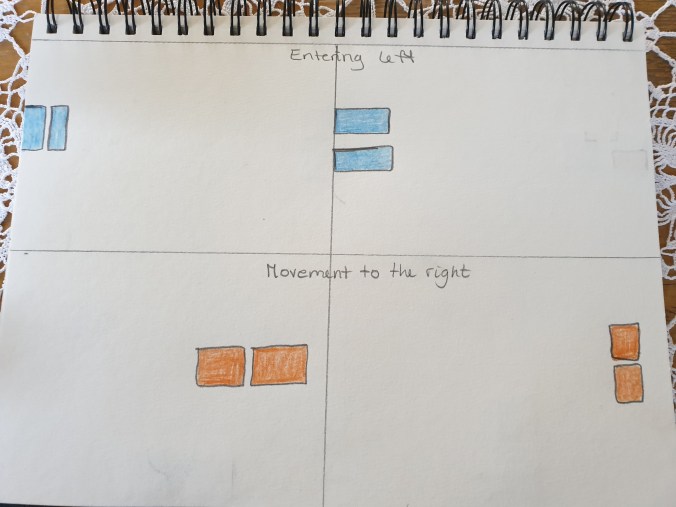
Those two pictures on top, entering to the left I think the squares show it very well, and that is because they are placed at the line.
Movement to the right: I think the picture at the left side shows it best, because the squares are placed after each other.
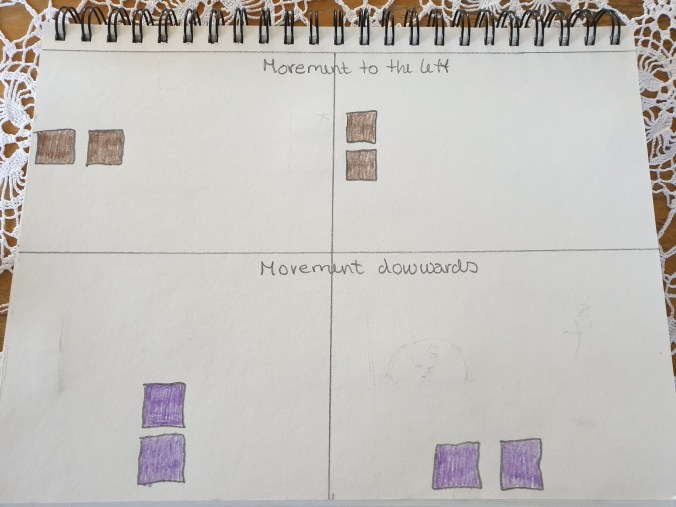
Movement to the left: The squares at the left side and right side shows movement to the left.
Movement downwards: The squares at the left and right side shows movement downwards.
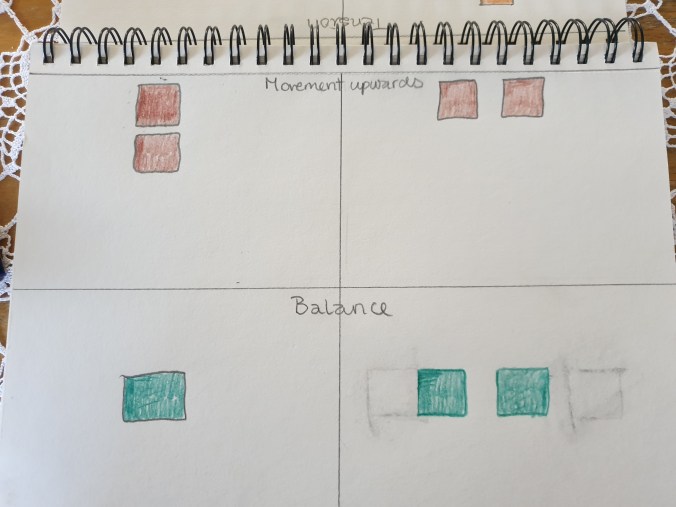
Movement upwards: Both pictures show movement upwards, but I think the picture at the left side show it best because the squares comes after each other instead of beside each other.
Balance: Both pictures show balance.
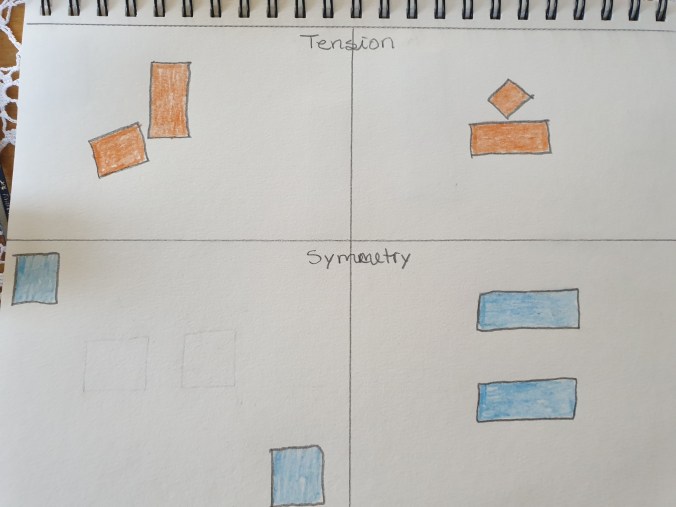
Tension: I think both pictures shows the effect well, because the squares are placed as they are. Making the effect that they are crashing.
Symmetry: Here I think that the picture at the left side shows symmetry best, by placing the squares in the opposite corners.
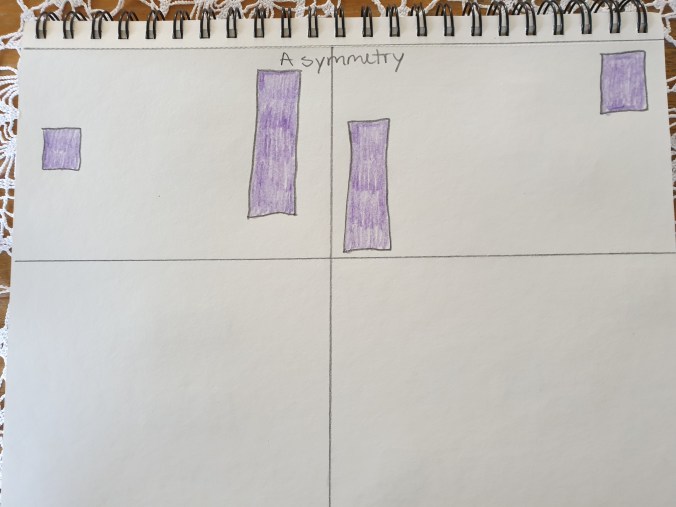
A-symmetry: On these two pictures the squares are and placing are the same just opposite. I think it shows the effect well.
 My reflective journal